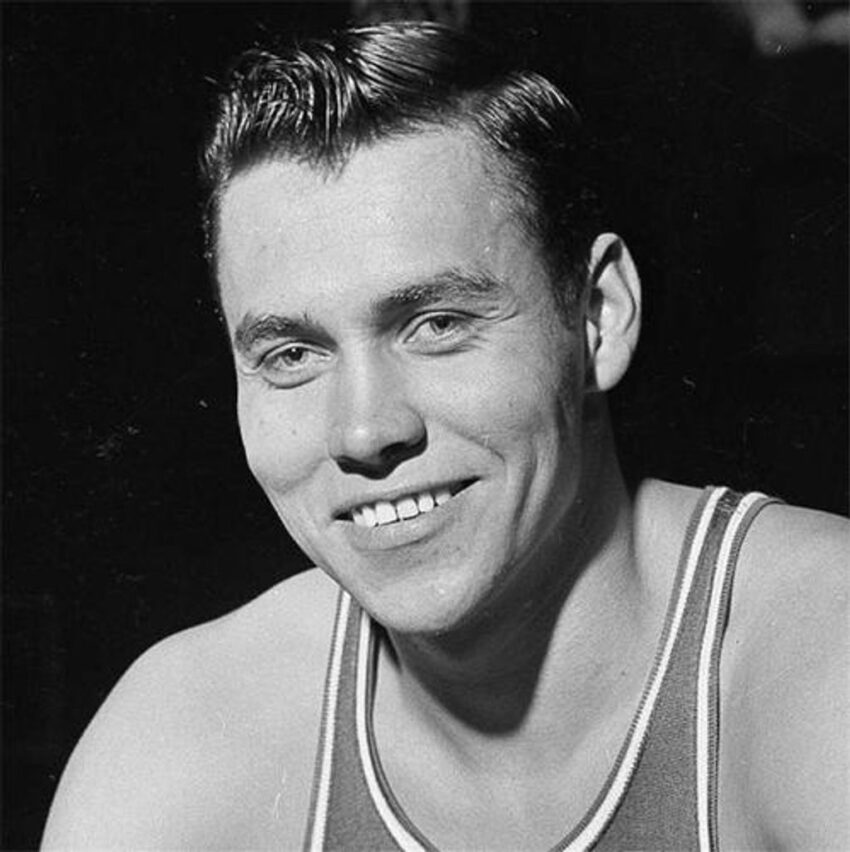
Cliff Hagan, the Hall of Fame basketball player who helped establish the University of Kentucky as a national powerhouse before becoming an NBA champion with the St. Louis Hawks, died Thursday, October 15, 2026. He was 94.
The University of Kentucky Athletics Department confirmed his passing in a tribute published October 16, recognizing him as one of the most influential figures in the history of its athletic programs.
Hagan was a member of Kentucky’s 1951 NCAA championship team, played a central role in the Wildcats’ undefeated 1953–54 season and later became a five-time NBA All-Star.
His professional career included the St. Louis Hawks’ historic 1958 NBA championship, a victory over the Boston Celtics that remains the franchise’s only NBA title.
Beyond his playing accomplishments, Hagan returned to the University of Kentucky as athletics director and helped guide the school’s sports programs through an important period of development.
His death has prompted tributes from basketball historians, former players and supporters of the Kentucky Wildcats.
Cliff Hagan’s Death Confirmed at Age 94
Hagan died on October 15, 2026, according to university officials and multiple established news organizations.
Oscar Combs, the longtime Kentucky basketball journalist and founder of The Cats’ Pause, was among those who publicly shared news of his passing.
The announcement quickly spread throughout the college basketball community, where Hagan remained a respected figure more than seven decades after his playing career at Kentucky.
The NBA subsequently published a remembrance acknowledging his achievements and contribution to professional basketball.
Hagan belonged to a generation of players who helped shape basketball’s development during the 1950s and 1960s.
He was admired for his scoring ability, physical style of play and determination despite being undersized for a forward by modern standards.
At 94, he was one of the surviving links to Kentucky’s early championship history under legendary coach Adolph Rupp.
Who Was Cliff Hagan?
Clifford Oldham Hagan was born on December 9, 1931, in Owensboro, Kentucky.
He developed his basketball skills during his youth and attended Owensboro High School, where he established himself as a standout player.
His achievements included helping his high school win a Kentucky state basketball championship.
Hagan subsequently joined the University of Kentucky, where he played under Hall of Fame coach Adolph Rupp.
During his college years, the Wildcats were among the most successful basketball programs in the United States.
Hagan developed into an exceptional scorer and rebounder, earning national recognition for his performance.
He became known for his hook shot, a difficult-to-defend offensive move that allowed him to score against taller opponents.
His success at Kentucky laid the foundation for a professional career that eventually placed him among basketball’s all-time greats.
His 1951 NCAA Championship With Kentucky
One of the defining achievements of Hagan’s college career came in 1951.
That year, Kentucky captured the NCAA men’s basketball championship under coach Adolph Rupp.
The Wildcats defeated Kansas State in the championship game, strengthening Kentucky’s reputation as a dominant college basketball program.
Hagan was part of a talented roster that also included future basketball greats.
The championship became an important milestone in his career and established his association with Kentucky’s winning tradition.
His continued improvement over the following seasons made him one of the Wildcats’ most important offensive players.
By the time he completed his college basketball career, Hagan had built a reputation as one of the outstanding players of his generation.
Kentucky’s Remarkable Undefeated 1953–54 Season
Hagan’s college legacy also includes one of the most unusual seasons in NCAA basketball history.
Kentucky did not compete during the 1952–53 season because of an NCAA suspension.
When the Wildcats returned in 1953–54, Hagan helped lead the team to a perfect 25–0 regular-season record.
Kentucky finished ranked No. 1 nationally.
Despite that achievement, the Wildcats did not participate in the NCAA Tournament.
The decision was connected to eligibility restrictions affecting key players, including Hagan and Frank Ramsey, who had completed their eligibility under NCAA postseason rules.
Rather than compete without those players, Kentucky declined the tournament invitation.
The undefeated team remains one of the most celebrated squads in Wildcats history.
Hagan’s role in that remarkable season further cemented his reputation as a Kentucky basketball legend.
Cliff Hagan’s NBA Career With the St. Louis Hawks
Following his college career, Hagan was selected in the 1953 NBA Draft by the Boston Celtics.
However, he did not immediately enter the league.
He served in the United States Air Force before beginning his professional basketball career.
In 1956, Hagan became part of one of the most consequential trades in NBA history.
The Celtics sent his rights, along with those of Ed Macauley, to the St. Louis Hawks in a deal that allowed Boston to acquire Bill Russell.
Russell subsequently became one of the most successful players in professional basketball history, winning 11 NBA championships with the Celtics.
Hagan, meanwhile, developed into a star with the Hawks.
He played 10 NBA seasons for St. Louis, becoming an essential member of a team that repeatedly challenged Boston during the late 1950s and early 1960s.
Winning the 1958 NBA Championship
Hagan’s greatest professional achievement came during the 1957–58 NBA season.
The St. Louis Hawks defeated the Boston Celtics in the NBA Finals, winning the championship in six games.
Hagan played alongside Hall of Fame forward Bob Pettit, forming one of the league’s most effective combinations.
Pettit’s outstanding performance in the championship-clinching game became one of the defining moments in Hawks history.
Hagan’s contributions throughout the season and playoffs were also crucial to the team’s success.
The 1958 title remains particularly significant because it was the only NBA championship won by the Hawks franchise.
Although the team later moved to Atlanta, that St. Louis championship remains part of the organization’s history.
For Hagan, the title represented the fulfillment of a professional ambition and established his place among the game’s most accomplished players.
Cliff Hagan’s NBA Statistics and Achievements
Throughout his NBA career, Hagan became known as a highly productive forward.
In 839 regular-season games, he averaged approximately 17.7 points, 6.6 rebounds and 3.2 assists.
He was selected to five NBA All-Star Games.
Hagan was also recognized for his scoring ability during postseason competition, where he helped the Hawks reach multiple NBA Finals.
His performances were especially impressive given the physical demands of the league during that era.
The NBA featured fewer teams and a demanding schedule, with players frequently traveling long distances while competing against familiar opponents.
Hagan’s ability to remain productive over a decade demonstrated his consistency and competitive determination.
His achievements ultimately earned him a place in the Naismith Memorial Basketball Hall of Fame.
Cliff Hagan and the Famous Bill Russell Trade
One of the most discussed aspects of Hagan’s career is his connection to the trade involving Bill Russell.
Boston drafted Hagan in 1953 but eventually included his rights in a deal with St. Louis before he played an NBA game.
The Celtics also traded Ed Macauley.
In return, Boston acquired the draft rights to Russell, who would become the cornerstone of one of the greatest dynasties in sports history.
The trade had a lasting effect on both franchises.
Russell helped lead Boston to 11 NBA championships, while Hagan developed into an All-Star and contributed to the Hawks’ 1958 title.
The deal remains one of the most influential transactions in basketball history.
Hagan’s success demonstrates that St. Louis received a valuable player, even though Russell’s extraordinary achievements ultimately became the dominant story associated with the trade.
Coaching Career With the Dallas Chaparrals
After his NBA playing career, Hagan continued his involvement in professional basketball through the American Basketball Association.
He joined the Dallas Chaparrals, serving as a player-coach.
The ABA was established as a rival professional league to the NBA and introduced several innovations that later influenced modern basketball.
Hagan’s experience as a veteran player allowed him to contribute both on the court and from the sidelines.
His coaching responsibilities included helping guide the team’s strategy and player development.
Although this stage of his career was shorter than his time with the Hawks, it demonstrated his continued commitment to basketball.
He eventually returned to Kentucky, where he began another important chapter in sports administration.
Cliff Hagan’s Years as Kentucky Athletics Director
Hagan returned to the University of Kentucky and became its athletics director in 1975.
He held the position until 1989.
During his tenure, he oversaw a broad range of athletic programs and administrative responsibilities.
His leadership occurred during a period when college athletics were becoming increasingly complex, with growing demands involving facilities, recruitment, finances and national competition.
Under his administration, Kentucky men’s basketball won the 1978 NCAA championship under coach Joe B. Hall.
That achievement added another significant chapter to the Wildcats’ history.
Hagan’s role as athletics director also strengthened his lifelong connection to the university.
Unlike many former players whose association with their schools is primarily remembered through athletic performance, Hagan contributed directly to institutional leadership.
His work as an administrator became an important part of his legacy.
Basketball Hall of Fame Recognition
Hagan was inducted into the Naismith Memorial Basketball Hall of Fame in 1978.
He became the first former University of Kentucky player to receive that honor.
The recognition acknowledged his achievements in college basketball, professional competition and the wider history of the sport.
He was later included in the inaugural class of the National Collegiate Basketball Hall of Fame.
Kentucky also honored his contribution to athletics by naming its former baseball stadium Cliff Hagan Stadium.
These honors reflected the breadth of his influence across basketball and collegiate sports administration.
His career combined championship success, individual excellence and organizational leadership.
Few athletes achieve comparable recognition across so many different stages of their professional lives.
Cliff Hagan’s Cause of Death: What Has Been Confirmed?
Although Hagan’s death has been confirmed by the University of Kentucky and the NBA, a specific medical cause of death has not been publicly disclosed in the official announcements reviewed as of October 17, 2026.
He was 94 when he died on October 15.
There has been no authoritative public confirmation that his death resulted from a particular illness, injury or medical condition.
It would therefore be inappropriate to attribute his passing to age-related complications or another cause without supporting evidence.
Families do not always release detailed medical information when announcing a loved one’s death.
Until further information becomes available, Hagan’s cause of death should be described as not publicly disclosed.
Remembering Cliff Hagan’s Legacy in Kentucky and the NBA
Hagan’s death marks the passing of one of the most accomplished figures in Kentucky basketball history.
He helped the Wildcats win a national championship, contributed to an undefeated college season and became an NBA champion with the St. Louis Hawks.
His professional career included five All-Star selections and induction into the Basketball Hall of Fame.
Later, he returned to Kentucky to lead the university’s athletics department for more than a decade.
His legacy also remains visible in his hometown of Owensboro, where the Cliff Hagan Boys & Girls Club carries his name.
For generations of Kentucky basketball supporters, Hagan represented a connection between the sport’s early championship years and the modern era.
His accomplishments remain part of the history of both the University of Kentucky and the Hawks franchise.
More than a celebrated basketball player, Cliff Hagan was a champion, coach, administrator and influential figure whose career spanned several important periods in American basketball.
Cliff Hagan Funeral and Memorial Arrangements
As of October 17, 2026, independently verified funeral arrangements or a family-authorized schedule for public memorial services had not been established in the sources reviewed.
Those wishing to honor Hagan’s memory should follow announcements from his family, the University of Kentucky or an authorized funeral provider.
His death has already prompted recognition from the university and basketball organizations associated with his career.
Additional memorial information may become available in the coming days.
Disclaimer
This article is based on official statements from the University of Kentucky Athletics Department, NBA reporting and established sports news coverage available as of October 17, 2026. Cliff Hagan’s death on October 15 at age 94 is confirmed. His specific medical cause of death and funeral arrangements have not been publicly verified. The article may be updated as additional authoritative information becomes available.